
The melanocortin-4 (MC4) signaling pathway plays a vital role in regulating appetite and energy expenditure. Variants in this pathway upstream of the MC4 receptor (MC4R) can result in rare genetic disorders of obesity.
At Rhythm, we are initially focused on several rare genetic disorders of obesity, in clinic, for which there are currently no effective or approved treatments.
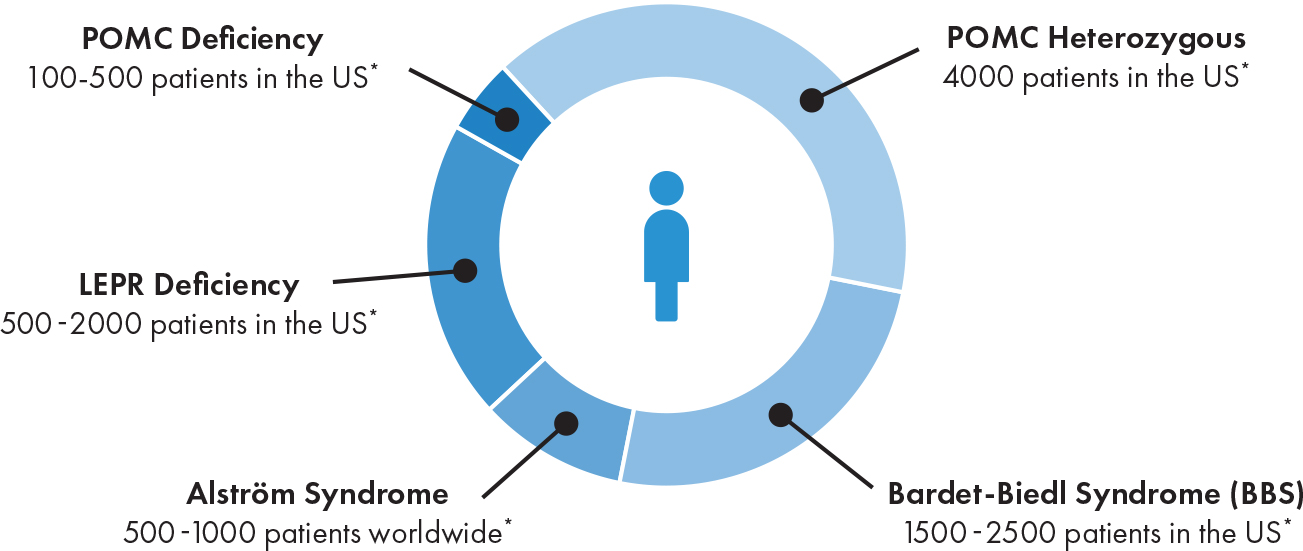
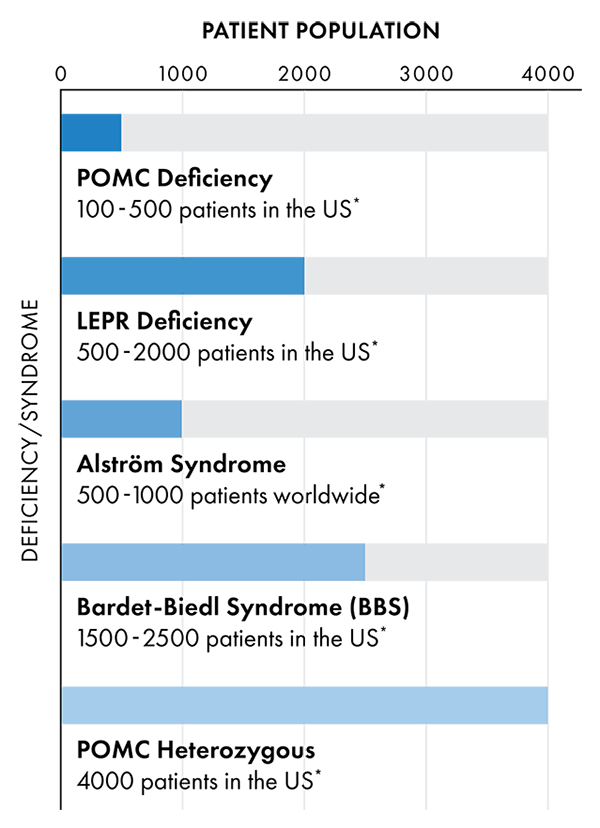
A life-threatening, ultra-rare orphan disease resulting from a variant of the POMC gene, leading to loss of function in the MC4 pathway
- Unrelenting hunger (hyperphagia) beginning in infancy
- Severe, early-onset obesity
- Adrenal insufficiency
A life-threatening, ultra-rare orphan disease resulting from a variant in the LEPR gene, leading to loss of function in the MC4 pathway
- Hyperphagia
- Severe, early-onset obesity
- Hypogonadotropic hypogonadism
A life-threatening, ultra-rare orphan disease resulting from multiple gene variants that affect many parts of the body. Signs and symptoms vary among affected individuals, but obesity is one of the key features.
- Severe, early-onset obesity
- Hyperphagia
- Progressive vision impairment/loss
- Polydactyly (having an extra finger or toe)
- Renal impairment
An extremely rare genetic disorder of obesity caused by a variant in the ALMS1 gene
- Obesity
- Type 2 diabetes
- Short stature
- Dilated cardiomyopathy
- Acanthosis nigricans (skin pigmentation disorder)
- Progressively worsening vision and hearing
- Sometimes, serious or life-threatening medical problems with the bladder, kidneys, liver, and lungs
We are also focusing on additional upstream MC4 pathway deficiencies for which setmelanotide can function as replacement therapy and provide activation of the MC4R, promoting satiety and weight control. This includes an additional, ongoing Phase 2 study to demonstrate proof of concept in Alström syndrome, POMC heterozygous deficiency obesity, and POMC epigenetic disorders.
